

The Heen Barn
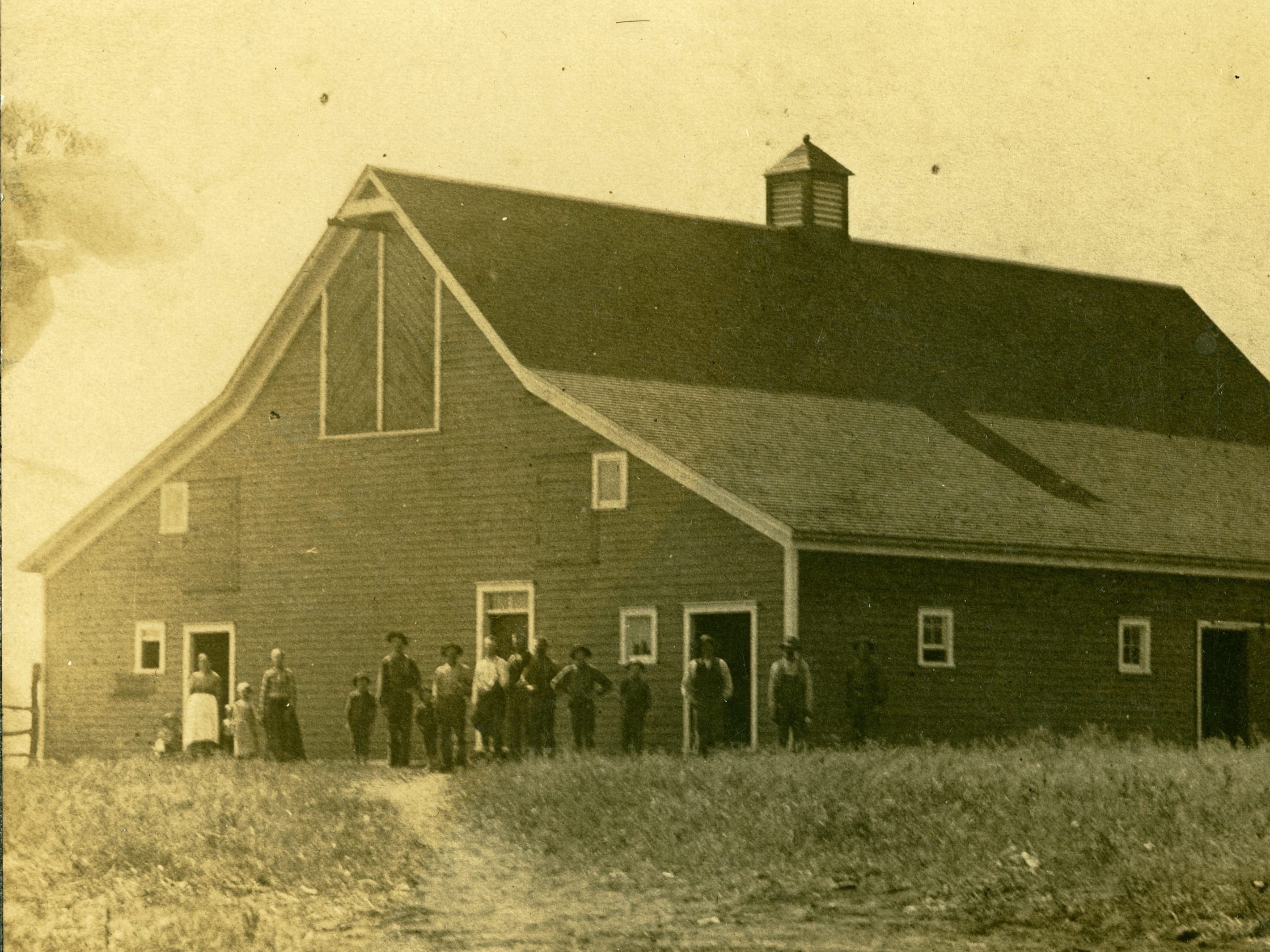
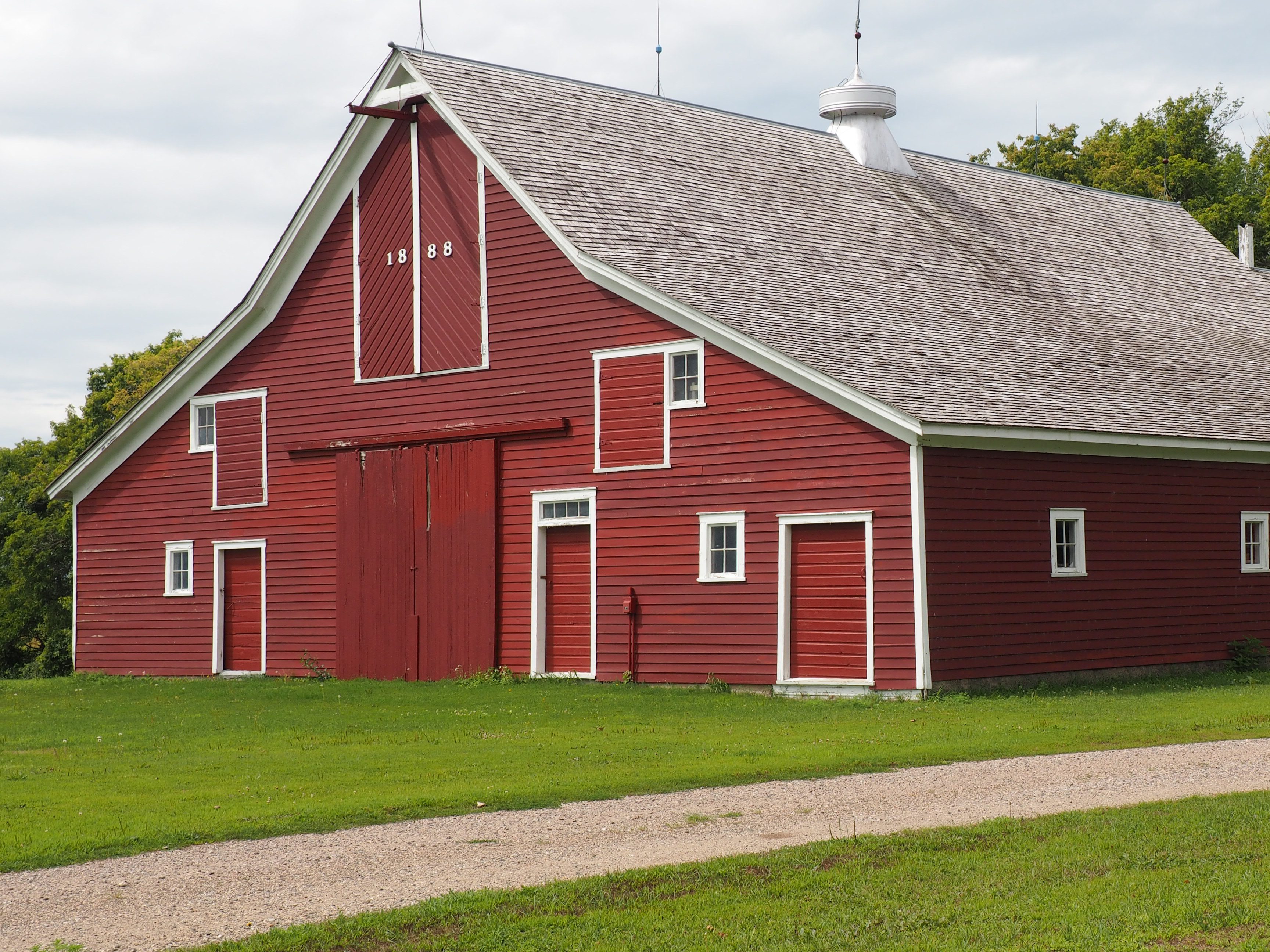
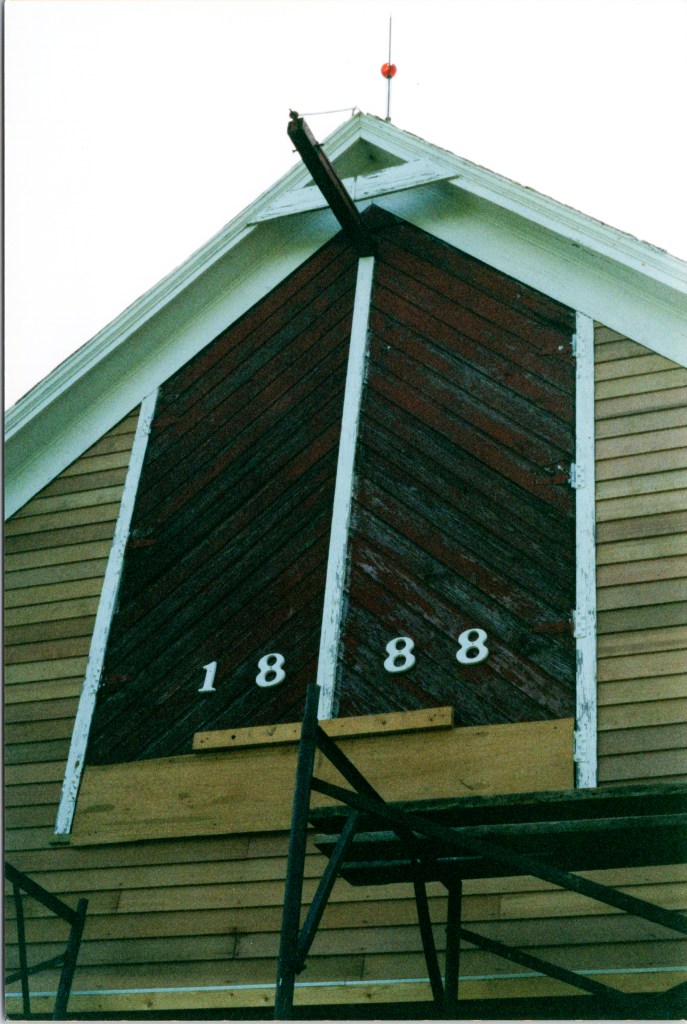
A 40′ x 60′ barn was built in 1888. The carpenters are unknown. When the barn was new, Wang Church was being built about two miles away. Having no other place to meet, the congregation had services in the hay mow part of the newly constructed barn until the church was completed. Services were also held in the Ole Soine barn about two miles southeast.
An addition on the west side of the Heen barn was put on at a later date. The exact date is unknown but it was before 1916, probably between 1900 and 1910. This was later known as the hog barn. Gunder Heen wanted to extend the barn on the same roof lines for this addition but Grandma Martha said no. “It would look to the neighbors like we’re trying to outdo them by having the biggest barn”, so the shape was altered to look like an addition.
Some time during this period, a windmill was built atop the barn on the east end. The legs came through the roof and were anchored below. This windmill powered a feed grinder. Neighbors would bring sacks of grain to grind for feed. The charge was 10 cents a sack. A terrific wind came up one day which blew the tail fin off, thereby making it impossible to control the blades by turning it out of the wind. The men threw grain into the grinder, hoping the work would slow it down but to their dismay, it was running in reverse so the grain would not feed in. Grandpa Gunder did a very dangerous thing by crawling up on the roof. There he was able to lasso the stub end of the tail and pull it out of the wind to stop it. At some time before Warren Heen was born in 1922, the windmill came or blew down and a big, one-cylinder engine (Root and VanerVoot) was brought in to power the mill. It was on four wheels and was pulled around by a team of horses. The engine was traded for a 10-20 McCormick Deering tractor in 1926.



The south side of the barn was designed for cattle, with stalls for milking and pens for holding. The north side was for horses and opened directly onto the yard where they were hitched to machinery every day. The horse barn also included an area for storage of harness and tack and currying equipment. Both the cow barn and the horse barn faced onto the hay mow. Individual mangers for horses were accessible directly by sliding panels at the head of each horse’s stall. The cow barn also had convenient access for feeding hay to the cattle. A feed room and attics over the barns provided storage.
A little lean-to about 8′ x 10′ was built on the east side of the barn to house the R and V engine described above. This addition was taken off in 1938 or ’39. A big flywheel protruded from the east wall of the barn, from which power was transferred to the mill by the use of a belt from the engine or tractor.
The first cupola was made of wood and was a favorite place for pigeons. They would fly in and out through the louvers and were a real nuisance. In the late 1930’s it was torn down and a steel cupola put on. That settled the pigeon problems. Cupolas were functional was well as decorative. They provided an important air flow through the hay storage area and cooled the barn in summer.
The hay barn is equipped with a hay carrier with a 4″ x 4″ wooden track. It is original in design and rare since most tracks are steel. To begin with, a fork mechanism was thrust into the hay from the hay rack outside of the barn and was pulled up with power from a team of horses. Later, rope slings were used which were a big improvement.
The weathervane atop the barn is a traditional running horse design and is finely executed metal. It is deceptively large, a couple of feet across and continues to show the wind direction, an important weather indication on the farm.
Written by Warren Heen, 1985
The barn has a unique style, a point of frequent comment by visitors. The style is sometimes called a hen and chicks plan, with a large center hay mow (the hen) and two separate wings to cover the chicks. The stall areas in the cow barn have a distinct cantilevered angle, Norwegian style. Originally the cow barn held only stalls for milk cows but these have been altered slightly to create pens at the west end. The last milk cow, a blue roan, had her own routine. She put her head over the yard fence gate at about 5 every night, looking at the house. When she saw Warren come out and heard the kitchen door shut, she started her promenade to the barn door. When she died in 1970, milk had to be purchased in a carton from town. This meant no more home-pasteurizing, skimming cream into a stainless steel bowl or butter-making.
The barn was always cozy, even when frost outlined every nail in the siding and the windows were frosted over. The top half of the Dutch doors were open for part or all of the day because plenty of fresh air prevented moisture buildup and respiratory problems for the animals. Getting water to cattle in winter involved putting corncobs into the steel water tank heater, lighting them, and breaking the ice crust so that the cattle could drink. The milk cow had special treatment sometimes, and she was served her own 5 gallon pail of water at her stall. Her head disappeared into the bucket and instantly the water was gone. No lady-like sipping there.
Keeping the large upper barn doors firmly closed was a careful routine. The consequences of failing to do this had been made clear in the 1930’s. One night after a long day of haying, Andrew decided the weather was calm so the doors could stay open until the next day’s haying. A storm came up suddenly during the night and in the morning both huge doors were on the ground. Never again. Linda and Carol had to lash the doors down after they came open during a similar night storm in the 1980’s.
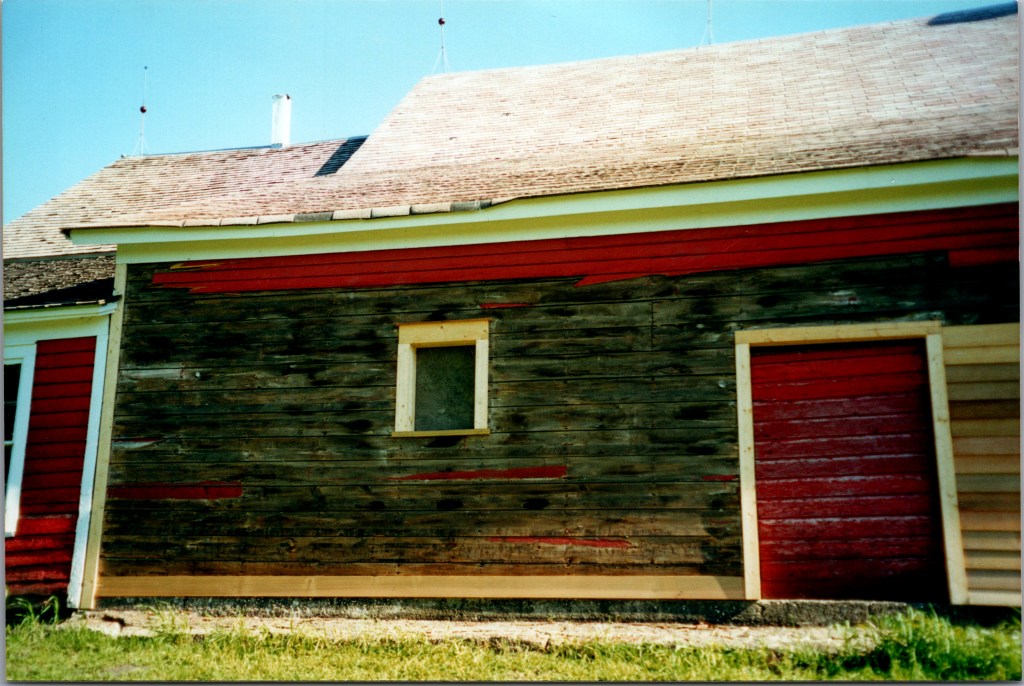
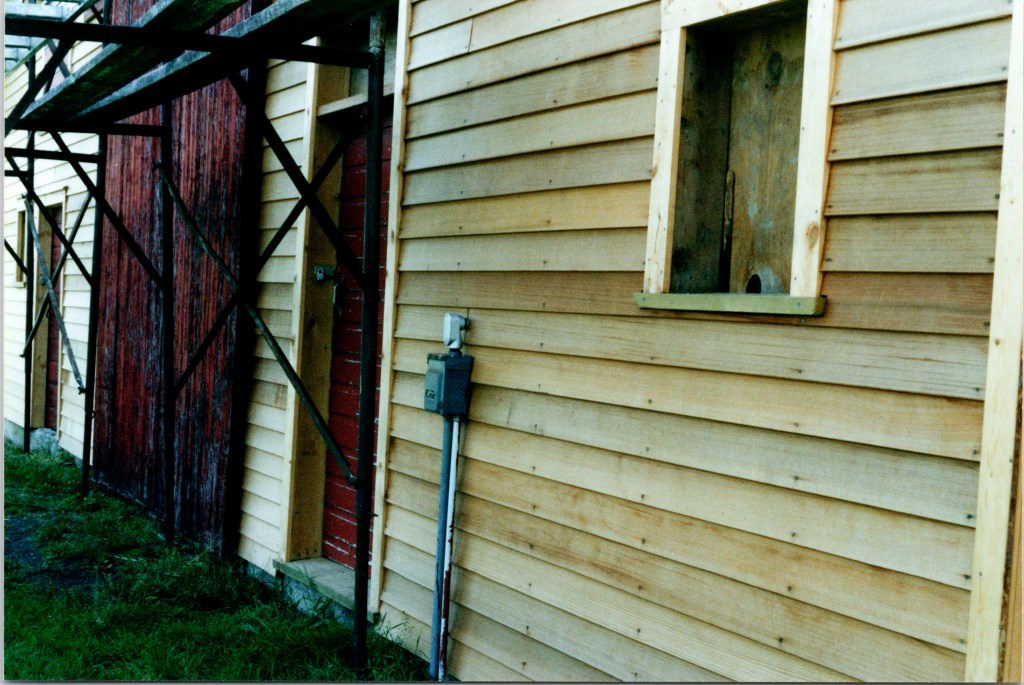
A door was cut between hog and cow barns in the late-l960’s so cattle and people could move easily through the area. Water hydrants went into the hog barn in 1967. The south foundation was fixed in 1965-66. The east side of the barn originally had 4 walk in doors–cow barn, feedroom, hay mow, and horse barn. In 1976 Warren Heen removed the feed room door and installed two large sliding doors and did foundation work. The previous year Les and Warren Heen worked on the north foundation. The north half of the barn was shingled in 1970 and the south in 1981. To save work, they passed shingles up to the roof through a hole in the roof that was scheduled for repair. One summer evening in ’81 when Warren and Les were up on the barn shingling, they watched a big storm form to the east. Bright sun from the west gave them a picture of the storm developing and soon they saw a brilliant white funnel cloud trail down, reaching halfway to the ground. It was 4 or 5 miles away, did not touch down and moved off to the northeast. That same year, the ’37 Dodge truck, loaded with discarded shingles, got stuck between gears, then got unstuck and rolled down the hill, Warren in hot pursuit.
In 1996 Harlen Leese built several new doors for the east side of the building. Les and Steve Prim redid electrical wiring at the well house and in the haymow. This work was done in preparation for the Maynard Lutheran Church Centennial Year Pioneer Day on September 8. Services, a dinner, hymn sing, and ice cream social were well attended and enjoyed by over 200 people. In 1987, The barn had been the scene of a re-creation of the first church services held there nearly a century earlier. This event was hosted by Warren and Ardith Heen and family. In 1991, Southwest State University had a farm-faculty meeting there, with readings by poet Nancy Paddock and discussion of local farm matters. On December 15, 1996, Hawk Creek Lutheran Church held its Sunday School Christmas program in the barn, complete with cow, donkey, sheep, goats, chickens, and pigeons, and a star hanging in the east.
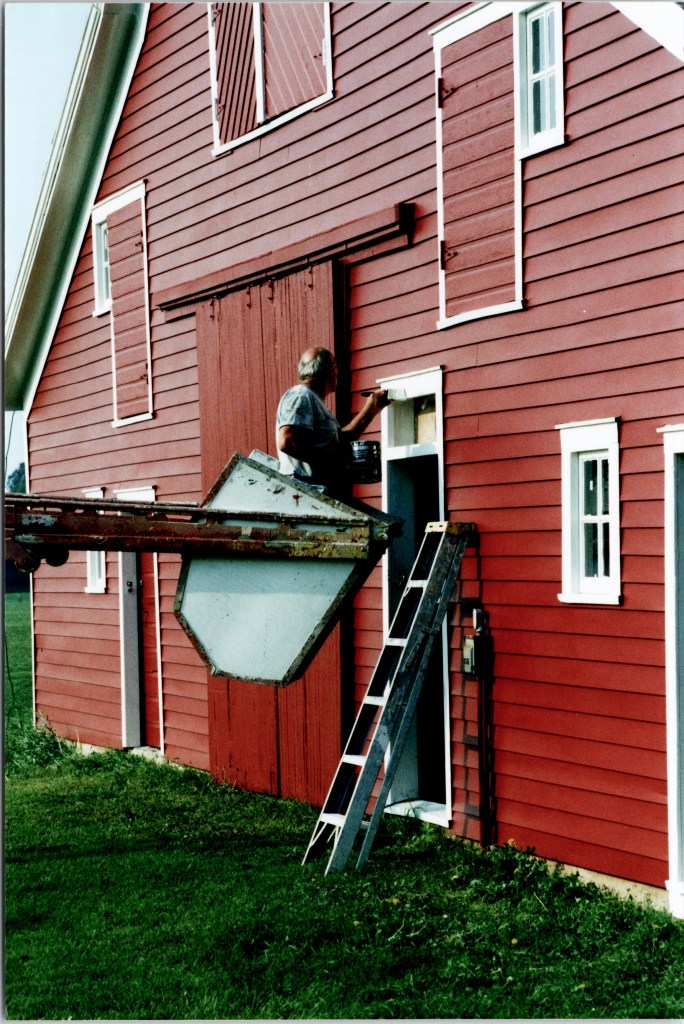
In 1995, Harlen Leese and Steve Miller straightened the roof of the hog barn and it was shingled. Cedar shingles replaced coral-colored asphalt. Dennis Byrd painted the barn in 1991 and trim was painted by Ray Miller in 1997.
Written by Carol L. Heen

Designed by Mickey Reed