Farming


Farming
Farming in west central Minnesota saw tremendous changes from the 1860’s to the 1920’s. The first settlers arrived with oxen. Breaking the sod of the tallgrass prairie was slow and difficult. Only a few acres of land could be developed each year.
The use of horses and the mechanical binder-reaper made it possible to cultivate more land. It was important to improve the horse breeding stock. In Sioux Agency and Swedes Forest Townships, in 1889, 21 farmers formed a syndicate to purchase a Percheron stallion for $2500.


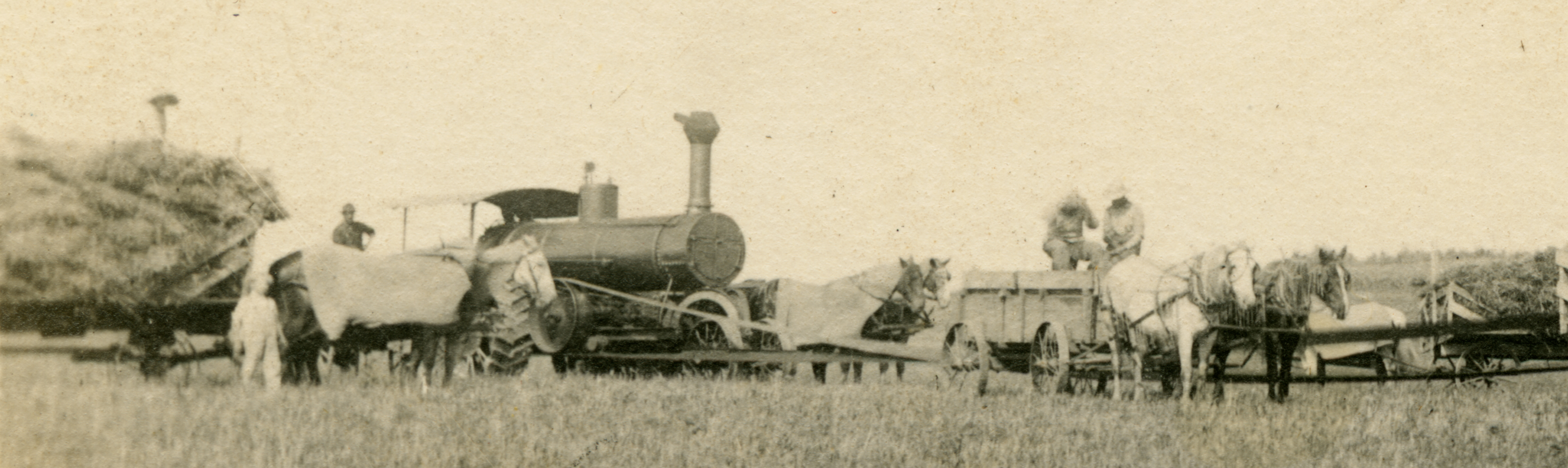
Horse power was supplemented by steam engines which powered threshing machines. The arrival of the big, noisy steam engines and threshing machine at harvest was an exciting time. The threshing crews had at least 12 men, all of whom had to be fed. The women were busy baking and cooking for the crew.
These changes in farming also changed the structure in which people worked. One farmer, driving a team of oxen to tend the fields, could be solitary. Operating a threshing machine required a large crew of people, as well as a sizeable capital commitment for purchase of the steam engine and the thresher.



Designed by Mickey Reed